The land
Where is Yorubaland?
Yorubaland is the homeland of the Yoruba people in West Africa: the south-west of Nigeria, reaching west into Benin and Togo, between the Atlantic coast and the Niger.
Hover over or tap a town to see one of its landmarks. The core of Yorubaland — the six south-western states of Nigeria (Lagos, Ogun, Ọ̀yọ́, Ọ̀ṣun, Ondo, Èkìtì) — is shown; Yoruba country continues into Kwara and Kogi states, and west across the border into Benin and Togo.
A land of towns
The Yoruba have been town-builders for centuries — Johnson's history opens with the country and its people, and devotes a chapter to the towns and villages, their walls, markets and government. Ilé-Ifẹ̀ is the sacred cradle of the Yoruba nation; Ọ̀yọ́ was the seat of empire; Ìbàdàn grew from a war camp into the largest city in tropical Africa of its day; Abẹ́òkúta rose under Olúmọ rock.
Read “Yoruba Towns and Villages” →
Read “Origin and Early History” →
Every town has a crown
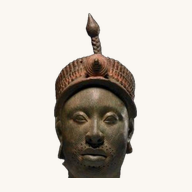
Yoruba government is royal: each historic town owes allegiance to its oba — the Ọọ̀ni in Ifẹ̀, the Aláàfin in Ọ̀yọ́, the Aláké in Abẹ́òkúta and dozens more. See the royal crowns of Yorubaland →
Beyond the homeland
Yorubaland is where the story begins, not where it ends: the Yoruba world now stretches from Freetown to London, Havana to Salvador da Bahia. Explore the Yoruba diaspora →
Landmark image credits
- Iga Idunganran — palace of the Oba of Lagos — Christopher Moses Onah, CC BY-SA 4.0 · Wikimedia Commons
- Mapo Hall — Ìbàdàn’s hilltop hall — Lightshot1, CC BY-SA 4.0 · Wikimedia Commons
- Olúmọ Rock — the Ẹ̀gbá fortress rock — AdeolaStudio, CC BY-SA 4.0 · Wikimedia Commons
- Ààfin Ọ̀yọ́ — the Aláàfin’s palace — Tijani Lukman, CC BY-SA 4.0 · Wikimedia Commons
- Ọ̀ṣun-Òṣogbo Sacred Grove — UNESCO site — Vitus Emmanuel Nnaemeka, CC BY-SA 4.0 · Wikimedia Commons
- The Ondo city gate — Ei’eke, CC BY-SA 4.0 · Wikimedia Commons
- The Deji’s old palace courtyard, Àkúrẹ́ — Kaizenify, CC BY-SA 4.0 · Wikimedia Commons
- Ààfin Ewì — the Ewì’s palace, Adó-Èkìtì — Favouridowu, CC BY-SA 4.0 · Wikimedia Commons
- Ilé-Ifẹ̀ and Ìjẹ̀bú-Òde images are CC0 (public domain) via Wikimedia Commons.
.jpg)


