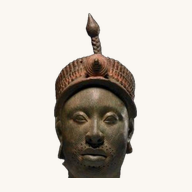
Crowns of Odùduwà
The Pedigree of the Yoruba Patriarchs
In the tradition Samuel Johnson set down, the crowned kingdoms of Yorubaland descend from one house — Odùduwà of Ilé-Ifẹ̀, through his son Okanbi, to the seven princes and princesses whose lines became the sovereign thrones. Beyond Johnson's seven, later scholarship and the courts' own traditions tie further crowns into the same descent — most through Ọ̀rànyàn, the one patriarch remembered at Ọ̀yọ́, Ifẹ̀ and Benin alike. Those links are drawn here with a dashed outline and cited to their sources.
- Crowned king (adé) — Wore a beaded crown — in Johnson's account the mark of the original sovereigns descended from Odùduwà.
- Founding ancestor — The patriarchs from whom the lines spring.
- Attested in later scholarship — A link beyond Johnson's text, drawn where reputable scholarship and court tradition give reasonable evidence — shown with a dashed outline.
The line, in full
Odùduwà
Patriarch at Ilé-Ifẹ̀ — Founder and ancestor of the race · c. 11th–12th c. (traditional)
The reputed founder of the Yoruba nation, who settled and died at Ilé-Ifẹ̀, the sacred city. From his house the crowned kingdoms claim descent.
Okanbi
Ìdẹ̀kọ̀ṣẹ́róàkẹ̀ · only son of Odùduwà — Only son of Odùduwà
The sole son of Odùduwà, who also died at Ilé-Ifẹ̀, leaving behind seven princes and princesses 'who afterwards became renowned. From them sprang the various tribes of the Yoruba nation.'
Ọwá Ọbọkun · Ìjẹ̀ṣà (Ilésà) beyond Johnson
of Ìjẹ̀ṣà — A son of Odùduwà in Ìjẹ̀ṣà tradition
Ìjẹ̀ṣà tradition remembers their founder Ajíbógun — 'Ọwá Ọbọkun', the brine-procurer — as a son of Odùduwà who fetched the sea-water that cured the old patriarch's blindness, whence the Ìjẹ̀ṣà are called Ọmọ Obokun. Johnson names Okanbi as Odùduwà's only son, so this stands as a parallel line rather than part of his seven.
Scholarship: Robin Law (1973) · S. Adebanji Akintoye (2010)
Olówu · Owu
King of Owu — Through Okanbi's first child, a princess — ancestor of the Owu
Ancestor of the Owu, one of the earliest Yoruba states. Okanbi's first child was a princess married to a priest who became 'the mother of the famous Olowu' — Johnson records the Olówu's descent from a daughter of Odùduwà as a claim to seniority among the crowns.
Aláké̩tu · Ketu
King of Ketu — Through Okanbi's second child, a princess — progenitor of the Ketu
Progenitor of the Ketu people, through Okanbi's second child, a princess. At the partition of Odùduwà's estate the Aláké̩tu inherited the crowns.
Ọba of Benin · Benin
King of Benin · Okanbi's third child — Okanbi's third child 'became king of the Benin people'
In Johnson's account 'the third, a prince, became king of the Benin people.' The Benin court tells it differently: the present dynasty is traced to Ẹwéka I, son of Ọ̀rànyàn — shown as a connection at right. The two traditions are the genealogy's clearest divergence.
Ọ̀rangún · Ìlá Ọ̀rangún
King of Ìlá — Okanbi's fourth child; inherited Odùduwà's wives at the partition
'The fourth, the Orangun, became king of Ila.' At the partition the Ọ̀rangún of Ìlá inherited Odùduwà's wives.
Onísàbẹ̀ · Sabẹ̀ (Savè)
King of Sabẹ̀ — Okanbi's fifth child; inherited Odùduwà's cattle
'The fifth, the Onisabe, or king of the Sabes' (in present-day Bénin). At the partition the king of Sabe inherited Odùduwà's cattle.
Olúpòpò · Pópó
King of the Pópó — Okanbi's sixth child; inherited Odùduwà's beads
'The sixth, Olupopo, or king of the Popos' (the coast west of Yorubaland). At the partition the Olúpòpò inherited the beads.
Ọ̀rànyàn · Ọ̀yọ́
Seventh child · first Aláàfin of Ọ̀yọ́ — Heir in the direct line; the patriarch from whom Ọ̀yọ́, Ifẹ̀ and Benin alike descend
'The seventh and last born, Oranyan, was the progenitor of the Yorubas proper, or as they are better distinguished Oyos.' Though absent at the partition he inherited the land itself, held his brothers as tenants, and was 'placed on the throne as the ALAFIN.' Later tradition makes him the great connector — father of the Ọ̀yọ́ kings, of Ẹwéka I of Benin, and (through his son Lájámisàn) of the ruling houses of Ifẹ̀.
The Aláàfin line · Ọ̀yọ́
Ọ̀yọ́ — Ṣàngó, Ajaka … 39 reigns — Ọ̀rànyàn's senior descent — the kings of Ọ̀yọ́
Ọ̀rànyàn's own line at Ọ̀yọ́: his sons Ajaka and Ṣàngó, and the thirty-nine reigns Johnson sets out in Appendix B, down to Atiba and Adeyemi. This is the senior royal succession listed below.
Ọọ̀ni of Ifẹ̀ · Ilé-Ifẹ̀ beyond Johnson
via Ọ̀rànyàn's son Lájámisàn — Odùduwà's own seat, restored through Ọ̀rànyàn
After Odùduwà, the Ifẹ̀ throne passed among the Ọbàtálá and Ọbalùfọ̀n houses until Ọ̀rànyàn returned and reigned as the second Ọọ̀ni. Through his son Lájámisàn the four ruling houses of Ifẹ̀ descend — and the Ọọ̀ni's coronation still pays homage at Ọ̀rànyàn's grove. So the senior seat at Ilé-Ifẹ̀ rejoins Odùduwà's blood through Ọ̀rànyàn.
Scholarship: Robert S. Smith (1988) · S. Adebanji Akintoye (2010)
Ẹwéka I · Benin beyond Johnson
first Ọba of the present Benin line — Son of Ọ̀rànyàn by Erinmwìndé of Egor · c. 13th c. (Benin tradition)
Invited to settle Benin's succession, Ọ̀rànyàn fathered Ẹwéka I by Erinmwìndé, daughter of the Ọgie of Egor; Ẹwéka I founded the present Benin dynasty. This is the Benin court's account (Egharevba), set against Johnson's, which makes Benin's founder Okanbi's third child (at left).
Scholarship: Jacob U. Egharevba (1934) · A. F. C. Ryder (1969)
Olú of Wárrì · Wárrì (Ìtsẹkírí) beyond Johnson
Itsekiri — founded by Prince Ginuwa — Sprung from the Benin line, and so from Ọ̀rànyàn · c. 1480
Prince Ginuwa, son of Ọba Olúa of Benin, led a migration of the chiefs' first-born sons and founded the Itsekiri kingdom of Wárrì about 1480, reigning as its first Olú. The Wárrì crown thus springs from the Benin line — and through Ẹwéka I from Ọ̀rànyàn himself.
Scholarship: William A. Moore (1936) · P. C. Lloyd (1963) · A. F. C. Ryder (1969)
👑 Crowns and coronets
Johnson draws a sharp line: 'All these princes became kings who wore crowns as distinguished from those who were vassals who did not dare to wear crowns, but coronets called Akoro, a high-crowned head-gear, embroidered with silver.' The beaded crown (adé) marks the sovereign lines on this chart; the coronet (àkòrò) belonged to provincial kings and great chiefs — privileged above a Baálẹ̀, but ranked below the crowned obas.
Connections beyond Johnson
Johnson's pedigree closes at the seven thrones. Later scholarship and the courts' own traditions tie several other crowns into the same descent — most through Ọ̀rànyàn, the one patriarch remembered as king at Ọ̀yọ́, Ifẹ̀ and Benin. Each link below rests on cited evidence, not Johnson's text.
Ilé-Ifẹ̀ — the Ọọ̀ni
Odùduwà's own seat. After his death the throne rotated among other houses until Ọ̀rànyàn returned to reign as the second Ọọ̀ni; through his son Lájámisàn the ruling houses of Ifẹ̀ descend, and the Ọọ̀ni's installation still honours Ọ̀rànyàn.
Scholarship: Robert S. Smith (1988) · S. Adebanji Akintoye (2010)
Benin & Wárrì — Ẹwéka I and the Itsekiri
The Benin court traces its present dynasty to Ẹwéka I, son of Ọ̀rànyàn. Generations later a Benin prince, Ginuwa, son of Ọba Olúa, founded the Itsekiri kingdom of Wárrì (c. 1480) — so both the Benin and Wárrì crowns join this house through Ọ̀rànyàn.
Scholarship: Jacob U. Egharevba (1934) · A. F. C. Ryder (1969) · William A. Moore (1936) · P. C. Lloyd (1963)
Ìjẹ̀ṣà — Ọwá Ọbọkun
Ajíbógun, 'Ọwá Ọbọkun' the brine-procurer, is remembered in Ìjẹ̀ṣà tradition as a son of Odùduwà — a line parallel to Johnson's seven.
Scholarship: Robin Law (1973) · S. Adebanji Akintoye (2010)
Ẹ̀gbá — the Aláké
The Ẹ̀gbá began as an offshoot of the Ọ̀yọ́ (the 'Yorubas proper'), settling the Ẹ̀gbá forest before breaking from Ọ̀yọ́ under Lísàbí and, after Old Ọ̀yọ́'s fall, founding Abẹ́òkúta about 1830. The senior Ẹ̀gbá throne takes its name from Aké; its house (Ajalake) claims descent from Odùduwà's line, the ground of the Aláké's seniority. So the Aláké links to this house through the Ọ̀yọ́ stock of Ọ̀rànyàn.
Scholarship: Saburi O. Biobaku (1957) · Robert S. Smith (1988)
Ìjẹ̀bú — the Awujalẹ̀ (contested)
Ìjẹ̀bú tradition brings its founder Obanta (Ogborogan) from Ilé-Ifẹ̀ — some accounts make him a grandson of Odùduwà, born to Odùduwà and Gborowo, daughter of the first Awujalẹ̀ Olú-Iwà — and Johnson's Appendix B records 'the first Awujalẹ̀ of Ijẹ̀bú' appointed in the reign of Aláàfin Jayin. But the link is genuinely disputed: successive Awujalẹ̀ have held that the Ìjẹ̀bú are not Odùduwà's children and came independently from the east. It is shown here as a claimed connection, not a settled one.
Appendix B ¶1 · Scholarship: Robin Law (1973) · Tunde Oduwobi (2004)
The Aláàfin line
Johnson's Appendix B lists the kings of Ọ̀yọ́ in order from Odùduwà, with their Baṣọ̀runs and the notable events of each reign — the senior royal succession descending from Ọ̀rànyàn (the line marked on the chart above). Reliable reign-dates exist only for the later kings, from the late 18th century; the earlier reigns can be ordered but not securely dated.
- 1 Odùduwà Capital — Ilé-Ifẹ̀
- 2 Ọ̀rànyàn Ancient Ọ̀yọ́ built
- 3 Ajaka Reigned twice; deposed for mildness
- 4 Ṣàngó Deified as the god of thunder
- 5 Ajaka Restored to the throne
- 6 Aganjù Regent Iyayun
- 7 Kori Ede and Oṣogbo built
- 8 Oluaso
- 9 Onigbogi
- 10 Ofiran Saki built by this king
- 11 Egunoju Igboho built
- 12 Orompoto
- 13 Ajiboyede The Bebe celebrated
- 14 Abipa Ọ̀yọ́ rebuilt
- 15 Obalokun Salt introduced
- 16 Ajagbo
- 17 Odarawu
- 18 Kanran
- 19 Jayin First Awujalẹ̀ of Ijẹ̀bú appointed
- 20 Ayibi After an interregnum
- 21 Osiyago
- 22 Ojigi Circumnavigation of the Niger and the Lagoon
- 23 Gberu
- 24 Amuniwaiye
- 25 Onisile
- 26 Labisi Baṣọ̀run Gaha
- 27 Awonbioju
- 28 Agboluaje The Bebe celebrated
- 29 Majeogbe
- 30 Abíọ́dún · c. 1770–1789 Long, peaceful reign; fall of Gaha
- 31 Aole · 1789–c. 1796
- 32 Adebo · c. 1796
- 33 Maku · c. 1797 Interregnum follows
- 34 Majotu Seizure of Ilọrin by the Fulani
- 35 Amodo Ìjàyè and Modakeke occupied
- 36 Oluewu · c. 1833–1835 Ibadan and Abẹ́òkúta founded; fall of Ancient Ọ̀yọ́
- 37 Atiba · 1837–1859 Ago became the Ọ̀yọ́ of the present day
- 38 Adelu · 1859–1875
- 39 Adeyemi · 1876–1905 Reigning at the close of Johnson's history
Other crowns & provincial crowns
Beyond the lines drawn above, Yorubaland's crowned kingships extend across the country; modern usage counts far more beaded crowns than the older tradition allowed. (Ifẹ̀, Ìjẹ̀ṣà and Wárrì appear in the connections above.) Each links to its full entry.
Principal crowns
Major Yoruba sovereigns named in Johnson's history.
- Ọ̀wọ́ni (Ọọ̀ni) of Ifẹ̀The title of the kings of Ilé-Ifẹ̀, the sacred cradle of the Yoruba race. The Ọọ̀ni is reckoned foremost among the crowned obas, Ifẹ̀ being honoured as the spiritual origin of the kingdoms.
- Awùjalẹ̀ of Ìjẹ̀búThe king of the Ìjẹ̀bú. Johnson records the title's origin in tradition — from a disputed succession — as having arisen in the reign of King Jayin.
- Aláké of the Ẹ̀gbáThe king of the Ẹ̀gbá (seated at Abẹ́òkúta). Johnson reckons the Alake among the crowns 'nearly related to the Aláàfin' and descended from Ọ̀rànyàn.
- Ọwá of Ìjẹ̀ṣàThe king of the Ìjẹ̀ṣà (seated at Ilésà). Johnson counts the Owa among the senior crowns reckoned children or grandchildren of Ọ̀rànyàn.
- Olú of Wárrì (Ìtsẹkírí)Paramount ruler of the Ìtsẹkírí kingdom of Wárrì in the western Niger Delta. The dynasty traces to Gínúwà, a prince of Benin, and the Ìtsẹkírí tongue is closely akin to Yoruba; the throne is reckoned among the great crowns of the wider Yoruba–Edo world.
Provincial crowns — the Èkìtì and Ondo kings
Crowned obas of the eastern towns and provinces.
- Osọmọwe of OndoThe king of Ondo (Osọmọwe). Johnson names the Osọmọwe among the descendants of the Ife king, sprung 'from a daughter'.
- Owóre of Ọ̀túnThe king of Otun — one of the four principal Èkìtì crowns in Johnson's list, and among the Ife king's descendants.
- Ajerò of IjeroThe king of Ijero — one of the four principal Èkìtì crowns Johnson enumerates.
- Elewì of Adó-ÈkìtìThe king of Adó-Èkìtì (Elewì) — one of the four principal Èkìtì crowns in Johnson's list.
- Elékọlé of IkoleThe king of Ikole (Elékọlé) — one of the four principal Èkìtì crowns Johnson records.
- Aláàrà of AraThe king of Ara (Aláàrà), named by Johnson among the Èkìtì crowns and the Ife king's descendants.
- Aláyé of EfonThe king of Efon (Aláyé of Efon-Alaaye), one of the Èkìtì crowns in Johnson's enumeration.
- Olójúdo of IdoThe king of Ido (Olójúdo of Ido-Èkìtì), among the Èkìtì district crowns Johnson records.
Further reading
The genealogy here follows Johnson's History of the Yorubas (1921), cited paragraph by paragraph above. These standard works corroborate and extend the tradition of the crowned kings.
- Robert S. Smith, Kingdoms of the Yoruba (1988, 3rd ed.). The standard survey of the Yoruba states and the tradition of the crowned kings.
- S. Adebanji Akintoye, A History of the Yoruba People (2010). Modern synthesis of Yoruba origins, Ifẹ̀, and the spread of the crowns.
- Robin Law, The Heritage of Oduduwa (Journal of African History 14) (1973). On the Odùduwà traditions and the descent claims of the Yoruba crowns, incl. Ìjẹ̀ṣà and Ìjẹ̀bú.
- Saburi O. Biobaku, The Egba and Their Neighbours, 1842–1872 (1957). The standard history of the Ẹ̀gbá, Abẹ́òkúta and the Aláké's chieftaincy.
- Tunde Oduwobi, Studies of the Ìjẹ̀bú king-lists and the Awujalẹ̀ traditions (2004). Critical analysis of Ìjẹ̀bú origins and the contested descent of the Awujalẹ̀.
- Jacob U. Egharevba, A Short History of Benin (1934). The foundational Benin court history: Ọ̀rànyàn and the founding of the Ẹwéka (Oba) dynasty.
- A. F. C. Ryder, Benin and the Europeans, 1485–1897 (1969). The standard scholarly history of Benin and its western Niger-Delta offshoots, incl. Wárrì.
- William A. Moore, History of Itsekiri (1936). The early documented history of the Itsekiri and Prince Ginuwa's founding of Wárrì.
- P. C. Lloyd, The Itsekiri in the Nineteenth Century (Journal of African History 4) (1963). Scholarly social history of the Itsekiri kingdom of Wárrì.
- J. A. Atanda, An Introduction to Yoruba History (1980). On the Ọ̀yọ́ empire and the Aláàfin's place among the sovereigns.
- Toyin Falola & Akintunde Akinyemi (eds.), Encyclopedia of the Yoruba (2016). Reference entries on the kingdoms, crowns, and the Odùduwà tradition.