Entity registry
People, places & powers of the book
Every entry carries its name variants and every passage where it appears. ⑂ marks figures whose story is told in competing accounts.
👑 See how the crowns descend — the royal pedigree of Odùduwà →
People
-
Odùduwà ⑂
The reputed founder and ancestor of the Yoruba race — in Johnson's words 'really a mythical personage' — claimed both as a migrating prince and, in Ife tradition, as the heaven-sent creator of the earth.
22 mentions
-
Ọ̀rànyàn (Ọ̀rànmìyàn) ⑂
Grandson (or youngest descendant) of Oduduwa, progenitor of the Ọyọ royal line and reputed founder of Ọyọ; his staff at Ile-Ife (Ọpa Ọranyan) remained a famous monument.
47 mentions
-
Ṣàngó ⑂
Fourth king of the Yorubas, of fiery disposition, whose reign ended in catastrophe and abdication; afterwards deified as the god of thunder and lightning, his emblems smooth axe-head 'thunder stones'.
66 mentions
-
Ajaka
Brother of Ṣàngó who reigned twice — deposed for mildness before Ṣàngó's reign, and restored after it.
22 mentions
-
Abiọdun
King whose long, peaceful and prosperous reign closed the era of Ọyọ's greatness; from his time onward Johnson's sources are eyewitnesses rather than bards alone.
30 mentions
-
Baṣọ̀run Gaha
The kingmaker Baṣọrun whose atrocities and dominance over successive kings fill a chapter of Part II, until his fall under Abiọdun.
23 mentions
-
Àtìbà ⑂
Son of Abiọdun and founder of the present city of Ọyọ after the fall of the old capital; his birth is told in two competing accounts.
61 mentions
Places
-
Ilé-Ifẹ̀ ⑂
The sacred city: cradle of the race in Yoruba tradition, seat of the Ọọni, and in Ife cosmogony the spot where the earth itself was created.
207 mentions
-
Ọ̀yọ́
The metropolis and seat of the Aláàfin — known to Hausa traders and early European records as Katunga; old Ọyọ fell in the revolutionary wars and was refounded by Atiba.
481 mentions
-
Ìbàdàn
The great war-camp turned city-state whose armies checked Ilorin at Osogbo and dominated the wars of the later nineteenth century.
963 mentions
-
Ìlọrin
Frontier city lost to the Fulani in the revolution; base of the jihadist push south until the defeat at Osogbo, and a party to the wars down to the British settlement.
317 mentions
-
Abẹ́òkúta
The Ẹgba city under Olumo rock, founded in the upheavals of the wars; gateway for missionaries and a principal power in the conflicts with Dahomey and Ibadan.
142 mentions
Crowns
The principal Yoruba sovereigns.
-
Aláàfin of Ọ̀yọ́
The king of Ọyọ and head of the Yoruba sovereigns, whose court, officers and rituals Johnson details in Part I's chapters on government.
238 mentions
-
Ọ̀wọ́ni (Ọọ̀ni) of Ifẹ̀ ⑂
The title of the kings of Ilé-Ifẹ̀, the sacred cradle of the Yoruba race. The Ọọ̀ni is reckoned foremost among the crowned obas, Ifẹ̀ being honoured as the spiritual origin of the kingdoms.
36 mentions
-
Awùjalẹ̀ of Ìjẹ̀bú
The king of the Ìjẹ̀bú. Johnson records the title's origin in tradition — from a disputed succession — as having arisen in the reign of King Jayin.
90 mentions
-
Aláké of the Ẹ̀gbá ⑂
The king of the Ẹ̀gbá (seated at Abẹ́òkúta). Johnson reckons the Alake among the crowns 'nearly related to the Aláàfin' and descended from Ọ̀rànyàn.
26 mentions
-
Ọwá of Ìjẹ̀ṣà ⑂
The king of the Ìjẹ̀ṣà (seated at Ilésà). Johnson counts the Owa among the senior crowns reckoned children or grandchildren of Ọ̀rànyàn.
59 mentions
-
Olówu of Òwu ⑂
The king of the Owu, one of the earliest Yoruba states. In the tradition Johnson records the Olówu's mother was a daughter of Odùduwà — a claim to seniority — though his father was 'a commoner, and not a prince of the blood.'
25 mentions
-
Aláké̩tu of Ketu ⑂
The king of Ketu. In Johnson's genealogy the Alaketu sprang from the second daughter of Okanbi and was 'the progenitor of the Ketu people' — one of the seven crowns of the Okanbi tradition.
3 mentions
-
Ọ̀rangún of Ìlá ⑂
The king of Ìlá (Ila Ọ̀rangún). In Johnson's list of Okanbi's descendants, 'the fourth, the Orangun, became king of Ila' — one of the senior Yoruba crowns.
6 mentions
-
Oníṣàbẹ̀ of Sabẹ̀ ⑂
The king of Sabẹ̀ (the Sabes): 'the fifth, the Onisabe, or king of the Sabes,' in Johnson's genealogy of Okanbi's descendants.
1 mentions
-
Olúpòpò of the Pópó ⑂
The king of the Pópó: 'the sixth, Olupopo, or king of the Popos,' among the seven crowns of the Okanbi tradition recorded by Johnson.
2 mentions
-
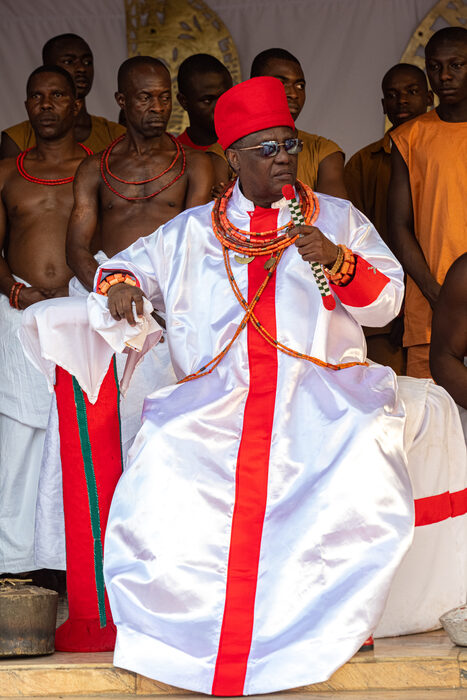
Ọba of Benin ⑂
The king of Benin. In Johnson's genealogy a son of Okanbi 'became king of the Benin people,' and tradition founds the Benin dynasty on Ọ̀rànyàn, who reigned there before Ọyọ́. The Benin (Edo) are a distinct nation, but their crown shares this Okanbi descent in Johnson's account.
21 mentions
-
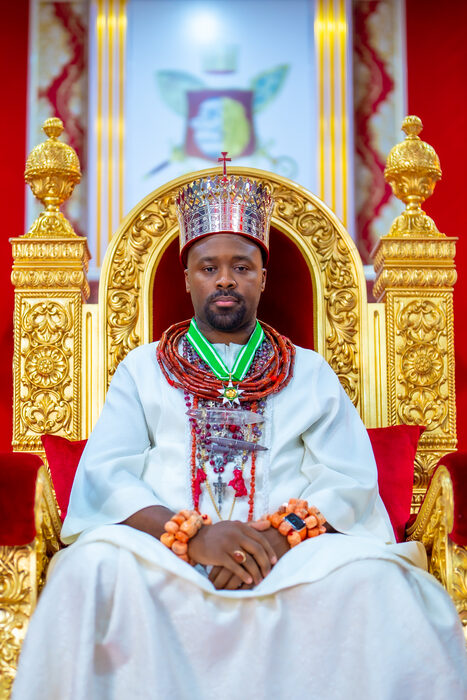
Olú of Wárrì (Ìtsẹkírí)
Paramount ruler of the Ìtsẹkírí kingdom of Wárrì in the western Niger Delta. The dynasty traces to Gínúwà, a prince of Benin, and the Ìtsẹkírí tongue is closely akin to Yoruba; the throne is reckoned among the great crowns of the wider Yoruba–Edo world.
1 mentions
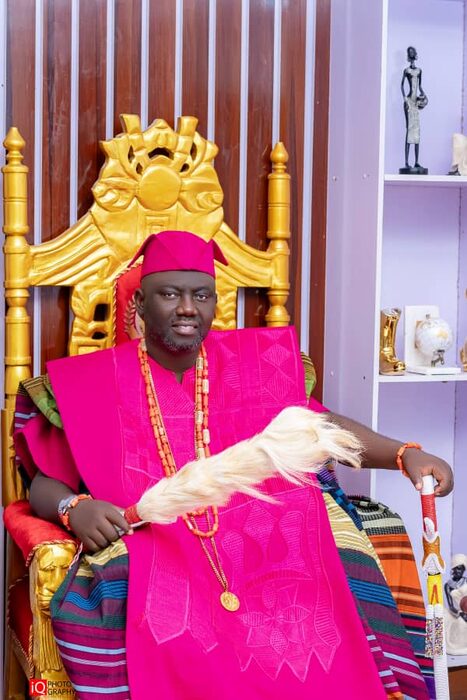
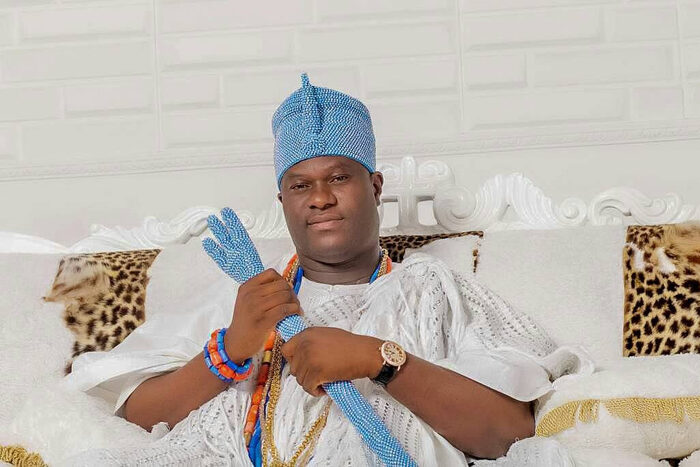
Provincial crowns
Further crowned obas of the towns and provinces — e.g. the Èkìtì and Ondo kings.
-
Osọmọwe of Ondo ⑂
The king of Ondo (Osọmọwe). Johnson names the Osọmọwe among the descendants of the Ife king, sprung 'from a daughter'.
1 mentions
-
Owóre of Ọ̀tún ⑂
The king of Otun — one of the four principal Èkìtì crowns in Johnson's list, and among the Ife king's descendants.
17 mentions
-
Ajerò of Ijero ⑂
The king of Ijero — one of the four principal Èkìtì crowns Johnson enumerates.
19 mentions
-
Elewì of Adó-Èkìtì ⑂
The king of Adó-Èkìtì (Elewì) — one of the four principal Èkìtì crowns in Johnson's list.
8 mentions
-
Elékọlé of Ikole ⑂
The king of Ikole (Elékọlé) — one of the four principal Èkìtì crowns Johnson records.
1 mentions
-
Aláàrà of Ara ⑂
The king of Ara (Aláàrà), named by Johnson among the Èkìtì crowns and the Ife king's descendants.
7 mentions
-
Aláyé of Efon ⑂
The king of Efon (Aláyé of Efon-Alaaye), one of the Èkìtì crowns in Johnson's enumeration.
7 mentions
-
Olójúdo of Ido ⑂
The king of Ido (Olójúdo of Ido-Èkìtì), among the Èkìtì district crowns Johnson records.
14 mentions
Offices & chieftaincies
Senior state and war titles below the crown.
-
Baṣọ̀run
The head of the Ọyọ́ Mèsì and effectively prime minister of the kingdom; in electing a new Aláàfin, Johnson notes, 'the Basorun's voice is paramount to accept or to reject.' The notorious Gaha held this office.
220 mentions
-
Aàrẹ̀-Ọ̀nà-Kakanfo
The supreme war chief — 'the title given in full is Are-Ona-Kakanfo… a title akin to a field-marshal.' By custom he commanded the armies and resided away from the capital.
85 mentions
-
Ọ̀yọ́ Mèsì
The council of 'seven principal councillors' of Ọyọ́ — the king-makers, led by the Baṣọ̀run, who elect the Aláàfin and check his power.
17 mentions
-
Balógun
The leading war chief of a town, next to the Baálẹ̀ in war, with his flanking commanders the Ọ̀tún (right) and Òsì (left). The office recurs throughout the inter-tribal wars of Part II.
356 mentions
-
Ẹ̀ṣọ́
The guardians of the kingdom — a military order of noblemen raised by merit alone, founded (tradition says) by Ọ̀rànyàn. 'Most of the chiefs sprang from the Esos of Ọyọ́.'
18 mentions
Deities
-
Ọlọ́dùmarè (Ọlọ́run)
The Supreme Being. Johnson notes 'the term Olorun is applied to GOD alone and is never used in the plural'; in Ife mythology Odùduwà is called 'the son of Olodumare… the father or Lord' of all.
8 mentions
-
Ọbàtálá (Òrìṣàlá)
The great arch-divinity, 'the god Obatala'; 'To Orisala are ascribed creative powers.' One of the principal òrìṣà of the Yoruba pantheon.
5 mentions
-
Èṣù (Elégbára)
The trickster and divine messenger. Johnson, writing as a churchman, renders him 'Satan, the Evil One, the author of all evil' — in Yoruba tradition the keeper of àṣẹ and the crossroads.
17 mentions
-
Ọya
A venerated and deified heroine — wife of Ṣàngó — named by Johnson among the chief deified heroes (with Ṣàngó and Òrìṣà Oko); associated with the Niger and the storm.
8 mentions
-
Ọ̀rúnmìlà
The divinity of wisdom and divination — the òrìṣà behind the Ifá oracle, which Johnson records as 'the great consulting oracle of the Yoruba country,' consulted before every undertaking.
1 mentions