Part II — Yoruba Kings and Contemporary Events
Fourth Period — Arrest of Disintegration, Inter-tribal Wars, the British Protectorate (Atiba to Adeyemi)
Chapter 35. The Establishment Of The British Protectorate
¶1 AFTER the titles and offices had been distributed, and the town settled down once more to the duties of civil life, the chiefs held a consultation about the Agreement Governor Carter had called upon them to sign, and which they were not then in a position to consider. After the pros and cons had been duly weighed it was agreed that with proper safeguards they might agree to it, provided the Governor gave due consideration to their objections.
¶2 A letter was then addressed to the Governor asking him to send up the document for them to reconsider in a regularly constituted assembly.
¶3 Governor Carter having in the meantime left for England, on his furlough, this request was cabled to Downing Street and the Acting-Governor, G. C. Denton, Colonial Secretary, was ordered in reply to visit Ìbàdàn in person and present the Agreement. Accordingly in August, 1893, the Acting-Governor visited Ìbàdàn for that purpose.
¶4 The document was again read and interpreted to them, and after due consideration the following letter was addressed to the Acting-Governor stating clearly the objections in their way to signing the Agreement.
¶5 Ìbàdàn, August 14th, 1893.
¶6 Your Excellency,—We are not unmindful of all the kindness done to us by Her Majesty the Queen, nor are we unappreciative of it: and, in order to be frank we desire to state to you our fears in objecting to a Resident European which we trust Your Excellency will see to.
¶7 First, we fear the authority and respect of the Bále and chiefs will suffer deterioration, as there may be two courts of appeal.
¶8 2. We fear our slaves will assert their freedom by running to the Resident.
¶9 3. We fear our wives will be taken by the soldiers which will be a source of great offence to us.
¶10 4. We consider our land as our inalienable property inherited from our forefathers, and never subject to sale. We consider it also our greatest wealth bestowed upon us by the Almighty and we do not desire it to go out of our hands.
¶11 If the Governor will see that our rights are not trespassed we make no scruple to sign all the terms of the Treaty.
¶12 We are your good friends, FIJABI THE BÁLE x (his mark). AND OTHER ÌBÀDÀN AUTHORITIES.
¶13 G. C. DENTON, Acting Governor.
¶14 The following was the reply to the above letter by the Acting-
¶15 Governor :—
¶16 Ìbàdàn, August 14th, 1893.
¶17 GENTLEMEN,—In reply to the letter of this date which was handed to me by you this morning, I have the honour to inform you that the conditions of the Agreement you tell me you are prepared to sign, do not contemplate interference with the Native Government of Ìbàdàn in any way.
¶18 2. I may also say that the officer in charge will not as at present proposed hold any court or take any action opposed to local customs and observances so long as they do not conflict with the ordinary principles of humanity.
¶19 3. The officer placed in charge at Ìbàdàn will be instructed that it is not the intention of the Lagos Government to interfere with the domestic slavery so long as it is conducted on humane principles, as the country will still remain vested in the Ìbàdàn authorities.
¶20 I fail to see that slaves will obtain their freedom by running to the Resident.
¶21 4. Any Hausa who takes a woman of the country away from her home, against her will, will be severely punished.
¶22 5. With regard to the question of land, the Agreement only deals with a place for the erection of quarters for an officer and men, and sufficient grounds for a construction of a line of railway should it be deemed advisable to undertake such a work.
¶23 6. In neither case can it be said that alienation of the land is contemplated. And that there may be no mistake on this
¶24 | point, I am quite prepared to guarantee that in recognition of your right, rent be paid to you for what land is utilized under the Agreement.
¶25 7. I can with safety promise you that your rights will not be infringed by the Lagos Government, the only object aimed at being to preserve peace, to secure open roads and reasonable freedom of action to the inhabitants generaily.
¶26 I am, gentlemen, Your good friend, G. C. DENTON, Acting-Governor. After the receipt of this letter and after further consideration the Agreement was signed the next day by the Chiefs. (vide App. A). But before signing the Agreement, and in consideration of the Treaty signed by them at Kíríjí in which the removal of Mọ́dàkẹ́kẹ́ was made binding on them, and in order to speak their minds with regard to the same, they submitted the following document to His Excellency, the Acting-Governor. A brief statement of the Mọ́dàkẹ́kẹ́ affair. Ìbàdàn, August 15th, 1893.
¶27 Your Excellency,—We beg to say that the real intent of the article respecting the Mọ́dàkẹ́kẹ́ affair in the former treaty was not understood before signature: but when the first Commissioners (headed by Mr. Higgins) came up and were at Mọ́dàkẹ́kẹ́ and insisted upon the removal, then the late Agbakin of Mọ́dàkẹ́kẹ́ who was one of the signatories was surprised and said, that he did not understand it so, and our contingents there then, viz., the present Balógun and Asipa, sent to us and we expressed our concurrence with the then Agbakin of Mọ́dàkẹ́kẹ́ as to our understanding of the article. It obliged the Rev. S. Johnson to come to us at Ìkirun and we told him the same thing.
¶28 When the Commissioners still insisted then the late Agbakin told them that it was one of the late Ifẹ̀ kings, Degunle by name, also known as Abi-ewe-ila, who gave their fathers the land out of pity, as the Ifẹ̀s illtreated them by making sacrifices with them: and since then they lived and flourished there, and served them as landowners; and the several times they fell out the Ifẹ̀s were the aggressors, or were the first to fire at them, but God usually gave them the victory. They know no other home.
¶29 When the Commissioners still insisted on their removal then the Agbakin said that the place beyond the river Osun mentioned by the Commissioners was a forest without a house to accommodate them and no cultivation to supply them with food, he then asked them to look at the town and think of the probable number of old and infirm men and women, with the infants and sucklings that may perish by exposure to the weather and then asked whether they would be able to stand responsible before God for the loss of their lives. This made them desist to press further the point, and matters remain as they are.
¶30 2. By right of conquest we have had our Ajeles in the Ìjẹ̀ṣà, Èkìtì, Yagba and Efon countries right up to Ọ̀tún and now that the Ìjẹ̀ṣàs, etc., have rebelled, Your Excellency, is it right for any one of the rebellious towns to dictate to us as the Ìjẹ̀ṣàs have done in asking us to remove our Ajele from a town which does not rebel as they have done? It is because we are conscious of the Queen’s power and goodwill that we have accepted a Resident, paying Her Majesty due deference. Ought not the Ìjẹ̀ṣàs to pay us some deference? In the first article of the Treaty the whole of the Ekun Ọ̀tún and Ekun Òsì are put under us, the Ifẹ̀ and Mọ́dàkẹ́kẹ́ people form a part of the’ Ekun Òsì.
¶31 We think they and the Ìjẹ̀ṣàs need being informed of this.
¶32 We leave the subject to Your Excellency’s wise consideration.
¶33 We are, Your Excellency’s, Fijasi, the Bále, x (his mark). With the other Authorities of Ìbàdàn.
¶34 After Governor Carter’s return from England, Capt. R. L. Bower, with a force of about 100 Hausas, was sent up to be the first Resident and Travelling Commissioner of the Interior Yoruba having his headquarters at Ìbàdàn. The Ìbàdàn authorities were prepared to assign him a place in the town for residence, but he marched through and took up his quarters outside the town walls, in the space between the town and the ancient city of Òwu.
¶35 With the establishment of the British Protectorate a new era dawned upon the country. It marked the close of the fourth and the beginning of the fifth period.
¶36 What the distinguishing feature of this new era will be, and how long it will last, are questions which only the future can answer,
¶37 When we have allowed for all the difficulties of a transition stage, the disadvantages that must of necessity arise by the application of rules and ideas of a highly civilized people to one of another race, degree of civilization, and of different ideas, we should hope the net result will be a distinct gain to the country. But that peace should reign universally, with prosperity and advancement, and that the disjointed units should all be once more welded into one under one head from the Niger to the coast as in the happy days of ABIODUN, so dear to our fathers, that clannish spirit disappear, and above all that Christianity should be the principal religion in the land—paganism and Mohammedanism having had their full trial—should be the wish and prayer of every true son of Yoruba.
¶38 THE Protectorate has been established and everything has settled down: but this end has not been easily attained as may very well be imagined. The country had to be convinced that a new regime had dawned upon it, and that the people must conform to it. This was not unaccompanied at first by a method high-handed and somewhat violent under successive Residents, but that was not unexpected.
¶39 We shall here but briefly indicate how the new order of things affects each unit, and incidentally we shall discover who were the real disturbers of the peace of the country.
§ 1. ABẸ́ÒKÚTA
¶41 The Ẹ̀gbás rigidly kept to the Treaty, so that the Lagos Govern- ment could find no fault with them. The intelligent portion of the community was admitted to a share in the Government, and they strove to conduct everything after the model of a civilized state. In fact it was the general opinion that in many things they ignored the rule, "Make haste slowly." The early career of the Alake and the new Government Secretary was highly beneficial to the well-being and progress of the Ẹ̀gbá community.
§ 2. ÌBÀDÀN
¶43 It took the Ìbàdàn rank and file some time to realize the fact that intertribal wars are for ever at an end in this country. It was customary with them, after the conferring of new titles that they should go to a war, for each chief and especially for the Balógun to recommend himself thereby to the people as fit for the title he holds. The Ìlọrins remained the only power they had not come to any definite terms with, so we were not surprised to hear on all hands, "Nje Bower koni si ogun Ìlọrin yi fun wa" ("Will not Capt. Bower then open for us an Ìlọrin campaign?") To be at home with nothing definite to do was rather irksome to those whose trade was war. Happily most of the important chiefs had huge farms wherein were engaged many of their domestics, and the majority of the men also were farmers, a good many were warriors pure and simple. No wonder then that for some time burglaries, arson, etc., were rife in the community.
¶44 Again, there soon followed a series of blunders which startled the community not only of Ìbàdàn but also all the Yoruba country, é.g., the threat to arrest the Bále of Ìbàdàn upon the ground of a supposed intrigue with Ìlọrin! But this charge which had no foundation in fact, was easily disposed’ of: all the same it seemed necessary in high quarters to do something which would strike terror into the whole country "in order to keep order"?! The Òsì Bále therefore offered himself to be arrested instead, for the Bále’s person he said was sacred, and that to arrest him would mean the break up of the town.
¶45 This was followed by the arrest of the Balógun of Ìbàdàn "until the man was found who had insulted Captain ——". But there was no such man. The salutation usually accorded to a gentleman on horseback by shaking the fist towards him was mistaken for a threat; and how was the Balógun to know who thus saluted the Captain out of doors some days after the event, in a huge town like Ìbàdàn some miles away from his residence? But this was speedily atoned for, and the Balógun honourably returned to his house. Then came the clash with Ọ̀yọ́ over the case of Lagunju the ex-Timi of Èdè, who appealed to his Suzerain to exert his good offices to restore him to his post. And again over the case of a man sent from Ìṣẹ́yìn to be emasculated for the usual offence for which that was the form of punishment. This resulted in what was known as "the bombardment of Ọ̀yọ́," during which a ricochet shot hit the ALÁÀFIN on the knee. This was however admitted to be a blunder, and the matter was speedily adjusted by the Governor on his return from furlough. After a short time the people and the energetic Resident got to know each other better, and there was not only harmony, but even friendship between them, especially at Ọ̀yọ́: for it was subsequently found out that the mistakes and misunderstandings were all due to imperfect information in which the part played by the interpreter was not only dishonourable but highly reprehensible, and he was condignly dealt with.
¶46 But Ìbàdàn never really settled down till after about eighteen months, when the Government of Lagos enlisted two battalions of men for military service in Northern Nigeria. This opening afforded relief to all those ardent spirits whose profession was arms, and with a wonderful celerity they imbibed and assimilated the new method of drill and discipline, by which they were led to a successful campaign. Again, the railway undertaking absorbed the energies of many. Since then, Ìbàdàn has had varied experience under various Residents. § 3. ÌJẸ̀ṢÀ It was hardly recognised that the Ìjẹ̀ṣàs under Ògèdèngbé were given to warfare as much as the Ìbàdàns, only that the scene of their operations was distant from Lagos but nearer Benin. Chief Ògèdèngbé’s war boys were known as Ipayes, and much mischief was done by them to the country people during the war. This habit they found hard to give up now that wars were over, All warlike spirits, including princes who thought they could do anything with impunity were among the number of his war-boys. Molestations of their country people, robberies, brigandage, and violence of every kind were of frequent occurrence, and he of course always shared the booty or plunder with them. Matters were from time to time reported to the Resident at Ìbàdàn. Capt. Bower wrote twice to warn Ògèdèngbé to keep His men in check; the old chief regarded this warning as a huge joke. That the soldiery should be given to violence was a matter of course to him, he simply laughed over the matter. The offence was repeated and that in an aggravated form on the men of Ara, and was duly reported. Capt. Bower, after due notice, went over to Ilẹ̀ṣà,. and according to arrangement, summoned at the King’s palace a meeting of all the chiefs. Ògèdèngbé, after a delay of about forty minutes, met him there, and the Captain after relating the cases and the warnings he had given their chief, there arrested him in the presence of them all. Ògèdèngbé had the good sense to warn his boys to refrain from any violent act in order to rescue him, and thus he prevented bloodshed— but by forced marches ere the news became generally known he was far distant. He was interned at Ìwó instead of being brought to Ìbàdàn the headquarters, "lest his old enemies might exalt over him." This, however was a mistake, for Ògèdèngbé would simply have come back to his old home. The actual perpetrators of the crime were also seized and cast into prison at Ìbàdàn. Capt. Bower also seized those rifles now in Ògèdèngbé’s possession which were used against the Ìbàdàns at Kíríjí. They were said to be an alarming number of perfect weapons of precision. Ògèdèngbé remained at Ìwó for a little over a year. When in 1896 Mr. Haastrup (generally known as Daddy Kumoku) was elected the Ọwá of Ilẹ̀ṣà, he pleaded for him with the Governor and Ògèdèngbé was released and restored to Ilẹ̀ṣà. He was given the title of Ọba’la, the next in rank to the Ọwá himself. The war-boys have since been suppressed and dispersed. § 4. THE ÈKÌTÌS The Èkìtìs are mostly farmers and traders; there was only one chief amongst them who was devoted to wars. This was Fabumi of Imesi Oloja Oke. He also had war-boys given to violence as those of Ògèdèngbé. Reports had from time to time to be made of him to the officer stationed at the River Otin of violence to peaceful traders, capturing and selling them as slaves to Benin, and other acts of brigandage. The captain usually sent to warn the King of Oke Mesi, till on one occasion even the King himself sent his son to complain of Fabumi: then it was that the situation dawned upon Captain Tucker. Then he knew that Fabumi was the culprit and not the King, who was powerless, being a man of about 120 years of age! Next he found a list drawn up by Captain Bower in which the name of Fabumi appeared as one of the troublesome spirits of the country, next after Ògèdèngbé, and one to be arrested. He consequently went up with about twenty Hausa soldiers and arrested him, and brought him bound to the River Otin camp, and the next day he sent him on to the Resident, Captain Hawtayne, at Ìbàdàn. The Captain gave him a good warning and set him at liberty. He was henceforth quiet, and subsequently became King of Mesi Ipole. It will be remembered that it was he who effected the capture of Ilori the Òsì, by simulating Akíntọ́lá’s war cry; it was he who decoyed the Ìbàdàn army to the clefts of Mesi Ipole ; but he failed to take Mọ́dàkẹ́kẹ́. He was an honourable warrior.
§5. IFẸ̀ AND MỌ́DÀKẸ́KẸ́
¶48 According to the Treaty of 1886, Mọ́dàkẹ́kẹ́ was to be removed from Ifẹ̀ soil, and rebuilt in a place between the Rivers Osun and Ọba, and the Ìbàdàns were to see that this was carried out.
¶49 That portion of the Treaty was galling to the Ìbàdàns, the Mọ́dàkẹ́kẹ́s simply would not hear of it, but the Ifẹ̀s were jubilant, and were determined to see it carried out.
¶50 Mọ́dàkẹ́kẹ́ was a large town, and the immediate removal was simply impracticable. In vain did they ask that a reconciliation be made between themselves and the Ifẹ̀s so that they might remain on the spot dear to them, containing as it did the ashes of their fathers ; the present generation knew no other home. But the Lagos authorities would not stultify themselves by going behind the Treaty, as it were, although they took no steps to enforce it, nor would the Ifẹ̀s yield to anything except removal. Thus they remained together for years.
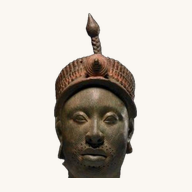
¶51 Subsequent Governors, who actually knew the towns, had their hands tied by the Treaty, much though they would have liked to see things effected differently. In course of time, however, the Ifẹ̀s were practically indifferent about it, as intermarriages between them had all but made them one people, and the hope was being entertained that the matter would die away, and that Mọ́dàkẹ́kẹ́ would remain. But Adelekan, the newly-created Owoni of Ifẹ̀, a man as austere as he was uncompromising, was unremitting in his efforts to see Mọ́dàkẹ́kẹ́ removed. He went so far as to conciliate Governor Carter in 1896 by giving him three of those national and ancestral works of art known as the "Ifẹ̀ Marbles." But since the general peace was kept, and the Mọ́dàkẹ́kẹ́s were as industrious as they were loyal to the Ifẹ̀s, and both populations seemed to live together in amity except for the Owoni, neither he nor his successors renewed the proposal to remove Mọ́dàkẹ́kẹ́.
¶52 Sir William MacGregor, during his regime as Governor, among other places visited Ile Ifẹ̀. He granted the Owoni an annual subsidy on account of his position. Thinking he had secured his man in this Governor, the Owoni with plausible excuses, but chiefly for this purpose, undertook the unusual course of visiting Lagos in person. He did so but without effect, for Sir William had seen the towns himself. But still, Adelekan was unremitting in his hostilities towards the Mọ́dàkẹ́kẹ́s, causing them repeated annoyance, fomenting disorders, and by false reports and unsubstantiated charges, got the two most powerful chiefs—the Balógun and the Ọ̀tún—transported to Ìbàdàn under charges of disturbing the peace. Then, later on, during the regime of Sir Walter Egerton (himself being on furlough at the time) the Owoni, armed with a copy of the old Treaty, got round the officer stationed at Ile Ifẹ̀, and it would seem secured his connivance. The Ifẹ̀s thereupon took it upon themselves to molest and annoy the Mọ́dàkẹ́kẹ́s in every possible way, even to the extent of entering their houses and seizing anything they took a fancy to, doing violence to men and women in a way they dared not do without provoking a war, before the Pax Britannica was imposed. The Owoni knew what he was about when he got the Balógun and the Ọ̀tún removed to Ìbàdàn. The officer located at Ile Ifẹ̀ saw all this but said and did nothing, which was very significant. The Mọ́dàkẹ́kẹ́s saw that a higher power was now behind the Ifẹ̀s and that they would have no redress. Thus it came to pass that on the 27th day of March, 1909, twenty-three years after the imposition of the Treaty, the town was broken up. Those of them who were descended from the Òwus removed to their ancestral homes to Òwu Ipole, between Ifẹ̀ and Ìjẹ̀bú, others to Gbangan, some to Oduabon, others to Èdè ; the bulk of the people, however, with the Ogunsua or Bále of Mọ́dàkẹ́kẹ́ removed to a place called Odekomu somewhere midway between Èdè, Ifẹ̀ and the Ìjẹ̀ṣàs, about ten miles from Ifẹ̀, just beyond the river Sasa which after the war was made the boundary of Ifẹ̀ territory.
¶53 Adelekan seems to have been raised up for the purpose of breaking up Mọ́dàkẹ́kẹ́, for he commenced his hostilities against the town soon after he was raised to the stool of the Owoni, and he died the year after the breaking up of the town. "They drove us twice from our home," he used to say, "and we must see that they are driven permanently from theirs."
¶54 Want of sufficient land for farming prevented the people from concentrating in a spot as at Mọ́dàkẹ́kẹ́. Unfortunately Odekomu is not on a caravan route, and that has restricted its population; but it is a small, compact and flourishing town, the people happy, contented and progressive as usual.
¶55 Providence, who ordereth and controlleth all things, saw that it was time Mọ́dàkẹ́kẹ́ should cease to exist after they had nobly done their part in shaping the history of the Yoruba country.
§ 6. ILorRIn
¶57 The Ìlọrins quickly showed themselves as the real disturbers of the peace of the country, and the real cause of the protracted war: for whereas the disturbances in the other provinces were more or less domestic and local, it was left for them to engage in political disturbances which under the old regime would have drawn forth the Ìbàdàn army out of home.
¶58 No sooner had the Ìbàdàns gone home from Ìkirun, and Governor Carter and his party had left them, than they broke the agreement arrived at with them and placed Ajeles (political Residents) at Ìkirun and Òṣogbo.
¶59 The boundary between the Ìbàdàn and Ìlọrin territory had been fixed at the Awere stream, to the south of Erin, leaving Erin and Ọ̀fà to the Ìlọrins, but the towns and villages hitherto under Ìbàdàn protection were definitely excluded from Ìlọrin interference.
¶60 For this encroachment therefore Captain Bower had to go to Ìlọrin to remonstrate with the Emir for disregarding the compact made with the Ìlọrins by Sir Gilbert Carter. The Ìlọrin chiefs took great exception to the manner Captain Bower was addressing their King, but partly from fear, and partly from the intervention of the Emir, they were restrained from laying violent hands on him. They called Captain Bower "Bawa" (pronounced Bahwah) ; that in Hausa is the name of a slave. All their great men have each one a Bawa—their principal slave—and hence Captain Bower was taken for Sir Gilbert Carter’s slave! For a slave to be talking after that manner to, and threatening their King, was intolerable ; as it was, he was said to have been literally hustled out of Ìlọrin.
¶61 Captain Bower, having driven the Ìlọrin political Residents out of Ìkirun and Òṣogbo, encamped with his handful of Hausa soldiers at the banks of the River Otin—a river of ill-omen to the Ìlọrins since the Jalumi War—about five miles north of Ìkirun. He sent to Lagos for re-inforcement, and he was granted a force of about 200 men with which he effectually protected the northern provinces of Yoruba from Ìlọrin encroachments.
¶62 All was apparently well after this, the weekly caravans from Ìlọrin and beyond went to and returned from the coast, the messengers of the Emir of Ìlọrin frequently came to the camp and as the Hausa soldiers were all Gambaris, mostly from beyond Ìlọrin, the intercourse between them and Hausas from Ìlọrin was frequent and natural, not knowing they were all spies! All of a sudden at the end of March, 1896,—Captain Bower being then at Ìbàdàn—the Ìlọrins came in force one morning, swooped down upon this small garrison and nearly overwhelmed it. With shell and shrapnel, and by the use of rockets, the noise of which they called Ṣàngó, the garrison succeeded in driving them back. The force was naturally strengthened, and wisely so, for within three months the same thing was repeated; however, the Ìlọrins then made but a poor show.
¶63 Towards the end of 1896 the Ìlọrin army came out for a regular campaign. It was a very large army, and they carried all before them till they came within a few miles of the camp. The reception they had twice received on previous occasions ill-disposed them to make a third trial of a frontal attack. For the present they swept along their old haunts to the Northern Èkìtì laying siege to Ọ̀tún and Orimope, both within the Lagos protectorate, with the intention of getting round to Ìkirun and Òṣogbo and taking the camp at Odo Otin in the rear.
¶64 From private information received of there being spies in the camp who would set fire to it immediately the Ìlọrins came and the fight commenced, Captain Shaw, the officer then in command drew up the whole of the men on parade and then with a sergeant and two privates entered each tent and turned out about twenty-three men in all who had no business to be there! They were "on a visit to their countrymen," they said. Strict precautions were then enforced about admitting strangers into the camp.
¶65 From messages received from the Owore of Ọ̀tún, about twenty men of the Hausa force were sent under Asani, a sergeant, to observe the movements and intentions of the Ìlọrin hosts ; and these reported an overwhelming force, and that Ọ̀tún was sure to be taken unless they received timely assistance. For this reason Sergeant-Major Dangana was sent with about eighty men with some rockets. The Sergeant-Major was a skilful and reliable leader: he dared not expose his small force to the overwhelming hosts of the Ìlọrins; but he hid some in a bush commanding a bypath to their rear, and the rest he posted on a rock in full view of the Ìlọrins. At the sight of them the Ìlọrins gave a shout and made for them, led by their Balógun Adamu, son of the late Karara and leader of the expedition. But the horses could not go on the craggy rocks, and the Lagos troops were therefore safe from their lances. Dangana then ordered volleys to be fired on them, the rockets also rent the air about them and frightened many away. Adamu was fatally hit on the neck, and in their presence he divested himself of his war-dress, and entrusted it to one of his men with orders not to stop till he reached home with it, for that he himself might not reach home. The dress was an heirloom in the family, from his grandfather Ali.
¶66 Their leader wounded, the Ìlọrins gave way and the Lagos troops followed them cautiously till they came within striking distance of the camp. There they discharged two or three rockets which set the camp on fire, and the host gave way! A large portion of them had gone a-pillaging in the morning, and these, returning to find their leader dead and the camp fired and broken up, made the best of their way home, being pursued only a little way by the Èkìtìs of Ọ̀tún and neighbourhood. Here the Ìlọrins lost hundreds of riderless horses.
¶67 Thus the camp at the River Otin was again saved from the determined attack of these intrepid horsemen.
¶68 By these repeated attacks on the Lagos troops and the disturbance of the peace, the hopes of the Ìbàdàns were for a while raised for an Ìlọrin campaign. But in February, 1897, the forces of the Royal Niger Company having its headquarters at Lokoja, with the two battalions raised at Ìbàdàn, entered Ìlọrin from the north after a single pitched battle before the gate of that city. Thus Ìlọrin has been subjugated and a Resident placed there to this day.
¶69 The disappointment of the Ìbàdàns was shared by those who had hopes of seeing the Yoruba country once more united under the ALÁÀFIN of Ọ̀yọ́ by the subjugation of Ìlọrin by the Ìbàdàn forces backed by a force of British troops. But it seemed this was not to be. The Ìlọrin power has thus been thoroughly broken, and the garrison was removed from the River Otin.