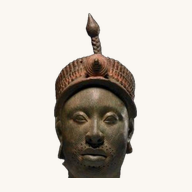
Deity / oracle
Èṣù (Elégbára)
The trickster and divine messenger. Johnson, writing as a churchman, renders him 'Satan, the Evil One, the author of all evil' — in Yoruba tradition the keeper of àṣẹ and the crossroads.
Appears in the text as: Esu, Elegbara
A note
Èṣù was used to refer to Satan by Bishop Ajayi Crowther in an attempt to conceptualise the devil for the Yoruba without needing to coin a new Yoruba word. Unfortunately, it wasn't a direct like-for-like in terms of the personage of these two beings. The biblical perspective would be that Èṣù is an idol and is therefore not worthy of worship — because anything that draws worship away from the almighty God is considered idolatry: so pride, your favourite footballer, celebrity, political figure, money, food, tradition — these can all be focal points of idolatry. In this sense, then, Èṣù along with all forms of idolatry are instruments for temptation, used by the devil to lure people away from knowing God.